📞  — free, 24/7
— free, 24/7 — free, 24/7| Package | Price per Dose | Price | |
|---|---|---|---|
| 360 pills | A$1.72 | A$827.31 A$620.48 Free shipping | |
| 180 pills | A$1.88 | A$450.44 A$337.83 Free shipping | |
| 120 pills | A$2.08 | A$332.67 A$249.50 | |
| 90 pills | A$2.19 | A$262.01 A$196.51 | |
| 60 pills | A$2.36 | A$188.40 A$141.30 | |
| 30 pills | A$2.56 | A$103.02 A$77.26 | |
| 10 pills | A$2.69 | A$35.30 A$26.48 | |
| 360 pills | A$2.45 | A$1,177.67 A$883.25 Free shipping | |
| 240 pills | A$2.54 | A$812.59 A$609.44 Free shipping | |
| 180 pills | A$2.69 | A$647.71 A$485.78 Free shipping | |
| 120 pills | A$2.96 | A$474.00 A$355.50 Free shipping | |
| 90 pills | A$3.20 | A$385.67 A$289.25 Free shipping | |
| 60 pills | A$3.40 | A$270.84 A$203.13 | |
| 30 pills | A$3.67 | A$147.18 A$110.39 | |
| 10 pills | A$4.00 | A$52.97 A$39.73 | |
| 180 pills | A$3.64 | A$874.41 A$655.81 Free shipping | |
| 120 pills | A$3.75 | A$600.60 A$450.45 Free shipping | |
| 90 pills | A$3.93 | A$471.05 A$353.29 Free shipping | |
| 60 pills | A$4.20 | A$335.62 A$251.71 | |
| 30 pills | A$4.59 | A$182.51 A$136.89 | |
| 10 pills | A$5.19 | A$70.63 A$52.97 |
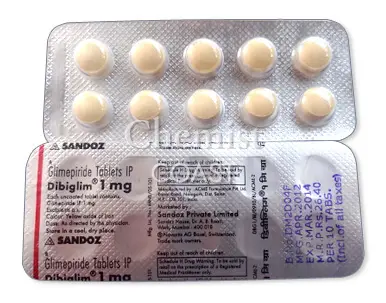
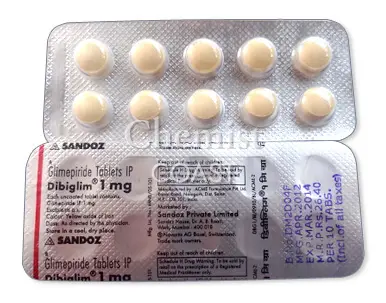
Glimepiride is a second-generation sulfonylurea antidiabetic agent. It stimulates pancreatic beta-cell insulin secretion by inhibiting ATP-sensitive potassium channels (KATP) on the beta-cell membrane, thereby enhancing endogenous insulin release. Its primary therapeutic use is glycemic control in adults with type 2 diabetes mellitus, typically as add-on therapy to diet and exercise.
Glimepiride belongs to the sulfonylurea class, a pharmacologic group that increases insulin secretion from functional beta cells. It acts by closure of the pancreatic beta-cell KATP channel, leading to membrane depolarization and Ca2+ influx with augmented insulin exocytosis. The agent is used to improve glycemic control in type 2 diabetes when diet and exercise alone are insufficient.
Pharmacokinetically, glimepiride is well absorbed after oral administration and undergoes extensive hepatic metabolism, primarily via cytochrome P450 2C9. The active metabolites contribute to the overall effect. The drug is excreted mainly in urine and bile, with a duration of action that supports once-daily dosing in most patients. Caution is advised in hepatic or renal impairment, and dosing should be tailored to individual glycemic response.
Compared with glipizide, glimepiride generally has a longer duration of action and can be dosed once daily in many patients, whereas glipizide often requires twice-daily dosing due to a shorter half-life. Onset of effect is similar or slightly slower for glimepiride. Both agents rely on CYP2C9 metabolism and carry hypoglycemia risk, especially with irregular meals or renal impairment.
Glyburide (glibenclamide) bears a higher risk of prolonged hypoglycemia, particularly in the elderly or those with renal impairment, and it is often avoided in such populations. Glyburide has a longer half-life and a broader duration of action compared with glipizide, which contributes to its risk profile. All three agents are hepatically metabolized; dosing and selection depend on patient comorbidity, concomitant medications, and renal function.
Glimepiride is indicated for adults with type 2 diabetes to improve fasting and postprandial glycemia when lifestyle measures fail to achieve targets. It may be used as monotherapy or in combination with other antihyperglycemic agents such as metformin, pioglitazone, or insulin, depending on the patient’s needs.
It is not indicated for type 1 diabetes or diabetic ketoacidosis. In children, use follows product labeling. Renal or hepatic impairment requires dose adjustments and close monitoring for hypoglycemia, with therapy tailored to the individual’s response and tolerability.
Glimepiride, glipizide, and glyburide share mechanism but differ in onset, duration, and safety profiles. The table summarizes typical properties used in clinical decision making.
| Parameter | Glimepiride | Glipizide | Glyburide (Glibenclamide) |
|---|---|---|---|
| Onset of action | 1–2 hours | 30–60 minutes | 1–2 hours |
| Duration of action | Approximately 14–24 hours | 6–12 hours | 24 hours or longer |
| Hepatic metabolism | Primarily CYP2C9 | Primarily CYP2C9 with other pathways | Hepatic metabolism via multiple pathways |
| Renal considerations | Caution in severe impairment; generally usable with monitoring | Typically acceptable in mild–moderate impairment | Not favored in significant renal impairment |
| Hypoglycemia risk | Moderate | Moderate | Higher, especially in elderly or CKD |
| Dosing frequency | Often once daily | Usually once or twice daily | Often once daily |
The most common adverse effect is hypoglycemia, which can range from mild symptoms to severe neuroglycopenia in vulnerable patients. Weight gain and gastrointestinal upset are also reported. Hypoglycemia risk is amplified by skipped meals, renal or hepatic dysfunction, and drug interactions with agents such as insulin, sulfonamide antibiotics, or beta-blockers.
Allergic reactions and skin changes are rare. Caution is advised during pregnancy and lactation; alternative therapies are preferred when guidelines indicate. Regular monitoring of blood glucose, renal and hepatic function, and signs of hypoglycemia should guide ongoing therapy and dose adjustments.
14–21 days. Free from A$284.93 .
5–9 days. A$42.74
−10% when paying with cryptocurrency.
−10% on all repeat orders.
All orders are packed in neutral, unbranded boxes with no product name on the outside.