📞  — free, 24/7
— free, 24/7 — free, 24/7| Package | Price per Dose | Price | |
|---|---|---|---|
| 360 pills | A$1.55 | A$618.27 A$556.44 Free shipping | |
| 180 pills | A$1.66 | A$331.20 A$298.08 Free shipping | |
| 120 pills | A$1.79 | A$237.97 A$214.17 | |
| 90 pills | A$1.94 | A$193.81 A$174.43 | |
| 60 pills | A$2.16 | A$144.73 A$130.26 | |
| 30 pills | A$2.65 | A$88.30 A$79.47 | |
| 360 pills | A$2.54 | A$1,015.74 A$914.17 Free shipping | |
| 180 pills | A$2.74 | A$547.12 A$492.40 Free shipping | |
| 120 pills | A$2.96 | A$395.00 A$355.50 Free shipping | |
| 90 pills | A$3.18 | A$318.94 A$287.04 Free shipping | |
| 60 pills | A$3.49 | A$233.06 A$209.76 | |
| 30 pills | A$4.35 | A$144.73 A$130.26 | |
| 180 pills | A$3.89 | A$777.75 A$699.97 Free shipping | |
| 120 pills | A$4.17 | A$556.93 A$501.24 Free shipping | |
| 90 pills | A$4.55 | A$453.88 A$408.49 Free shipping | |
| 60 pills | A$5.08 | A$338.56 A$304.71 Free shipping | |
| 30 pills | A$6.18 | A$206.07 A$185.47 | |
| 20 pills | A$6.40 | A$142.28 A$128.05 | |
| 10 pills | A$6.85 | A$76.04 A$68.43 |
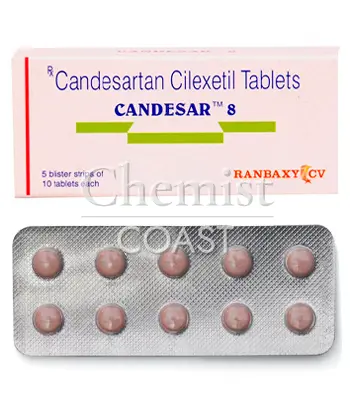
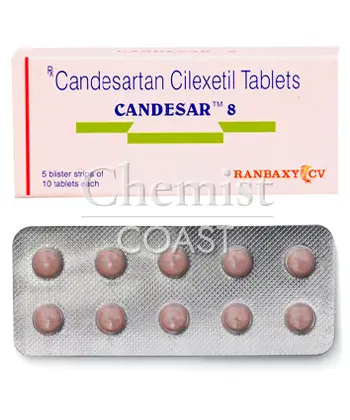
Candesartan is an angiotensin II receptor blocker (ARB) of the sartans class that selectively antagonizes AT1 receptors, reducing angiotensin II–mediated vasoconstriction and aldosterone secretion. It is primarily used to treat hypertension and is also indicated for heart failure and to reduce cardiovascular risk in certain high‑risk patients.
Candesartan is supplied as the prodrug candesartan cilexetil. After oral ingestion, it is cleaved to the active moiety candesartan; systemic exposure supports once‑daily dosing. The drug is mainly excreted renally, with hepatic metabolism contributing to clearance, and the pharmacodynamic effects persist over the dosing interval.
As a selective AT1 receptor antagonist, candesartan lowers systemic vascular resistance and arterial pressure without eliciting reflex tachycardia. It reduces aldosterone‑mediated volume expansion and improves renal hemodynamics in hypertension, with a favorable tolerability profile in appropriately selected patients.
In essential hypertension, candesartan is used as monotherapy or in combination with other antihypertensives to lower systolic and diastolic blood pressure. It is suitable for adults across age groups, including those with comorbid metabolic conditions, and may be chosen when ACE inhibitors are not preferred due to tolerability concerns.
In heart failure with reduced ejection fraction, candesartan is employed to reduce cardiovascular death and hospitalization for heart failure and to improve functional status when ACE inhibitors are not tolerated or are used as add‑on therapy. In patients with type 2 diabetes and persistent albuminuria, candesartan provides renal protection by reducing albumin excretion and helping slow nephropathy progression. It is also used to lower cardiovascular risk in hypertensive patients with relevant comorbidities when indicated by clinical guidelines.
The active candesartan molecule binds selectively to AT1 receptors, blocking angiotensin II from activating pathways that promote vasoconstriction, sodium and water retention, and aldosterone release. The immediate effect is arterial dilation and reduced vascular resistance, with downstream reductions in preload and afterload. The prodrug form is converted to candesartan in the gut and liver, enabling effective receptor blockade after oral dosing.
With receptor blockade, plasma renin and angiotensin II often increase through feedback mechanisms, but the excess Ang II cannot exert pressor effects via AT1. Some activation of AT2 receptors may occur secondarily, potentially contributing vasodilatory and antiproliferative effects. The net result is sustained blood pressure reduction and improved hemodynamics in heart failure and diabetic nephropathy contexts.
Common adverse effects include dizziness, fatigue, and upper respiratory tract symptoms. Hyperkalemia risk is elevated in patients with renal impairment, diabetes, or concomitant use of potassium‑sparing agents. Hypotension and renal function changes may occur, particularly after initiation or dose adjustment. Angioedema is uncommon but possible with ARBs, though less frequent than with ACE inhibitors.
Safety considerations include avoidance during pregnancy and lactation, and caution in moderate to severe renal impairment. Monitor serum creatinine and potassium after starting candesartan or after dose changes. Potential drug interactions include NSAIDs reducing antihypertensive efficacy and increasing renal risk, potassium supplements or substitutes raising hyperkalemia risk, and lithium with possible toxicity; adjust therapy as clinically indicated.">
14–21 days. Free from A$284.93 .
5–9 days. A$42.74
−10% when paying with cryptocurrency.
−10% on all repeat orders.
All orders are packed in neutral, unbranded boxes with no product name on the outside.