📞  — free, 24/7
— free, 24/7 — free, 24/7| Package | Price per Dose | Price | |
|---|---|---|---|
| 360 pills | A$2.38 | A$1,227.09 A$858.96 Free shipping | |
| 180 pills | A$2.54 | A$652.96 A$457.07 Free shipping | |
| 120 pills | A$2.65 | A$454.23 A$317.96 Free shipping | |
| 90 pills | A$2.85 | A$365.90 A$256.13 | |
| 60 pills | A$3.05 | A$261.80 A$183.26 | |
| 30 pills | A$3.36 | A$145.08 A$101.55 | |
| 360 pills | A$2.61 | A$1,340.66 A$938.46 Free shipping | |
| 180 pills | A$2.76 | A$709.74 A$496.82 Free shipping | |
| 120 pills | A$2.89 | A$495.23 A$346.66 Free shipping | |
| 90 pills | A$3.11 | A$400.60 A$280.42 | |
| 60 pills | A$3.31 | A$283.88 A$198.72 | |
| 30 pills | A$3.67 | A$157.70 A$110.39 | |
| 10 pills | A$4.42 | A$63.06 A$44.14 | |
| 360 pills | A$3.89 | A$1,999.96 A$1,399.97 Free shipping | |
| 180 pills | A$4.13 | A$1,063.06 A$744.14 Free shipping | |
| 120 pills | A$4.33 | A$741.29 A$518.90 Free shipping | |
| 90 pills | A$4.64 | A$596.18 A$417.33 Free shipping | |
| 60 pills | A$4.95 | A$422.68 A$295.88 Free shipping | |
| 30 pills | A$5.45 | A$233.41 A$163.38 | |
| 10 pills | A$7.73 | A$110.38 A$77.26 |
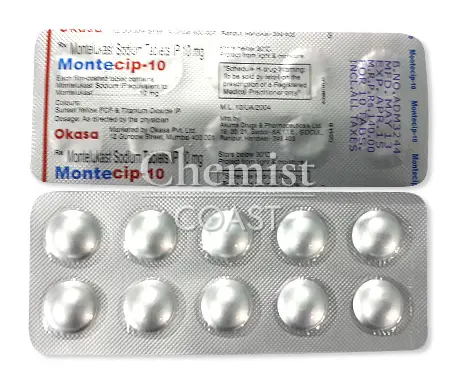
Montelukast is a leukotriene receptor antagonist used in allergy and asthma management. It blocks leukotriene D4 at the CysLT1 receptor, reducing airway inflammation and bronchoconstriction; it is primarily prescribed to prevent asthma symptoms and to treat seasonal allergic rhinitis.
In clinical terms, montelukast is selective for the CysLT1 receptor. By blocking leukotriene D4, it reduces bronchial edema, mucus production, and smooth-muscle contraction, offering anti-inflammatory benefits beyond rescue inhalers. This mechanism is often used alongside inhaled corticosteroids to support daily control.
Pharmacokinetically, montelukast is well absorbed when taken by mouth, with peak plasma levels in about 3 hours. It binds heavily to plasma proteins and is metabolized in the liver to inactive compounds, with elimination driven largely by fecal excretion. The half-life ranges roughly 2.7 to 5.5 hours, supporting once-daily dosing for many patients.
Montelukast has a role in chronic asthma management, especially as an add-on therapy for patients who prefer an oral option or who have allergic triggers. It is approved for use in people aged 12 months and older to help prevent symptoms and reduce exacerbations when used with other controller medicines.
It is commonly prescribed for allergic rhinitis, including seasonal and perennial forms. By dampening leukotriene-driven inflammation in nasal tissues, montelukast can improve sneezing, itching, nasal congestion, and postnasal drip for many patients.
For exercise-induced bronchoconstriction, a pre-exercise dose can lessen the likelihood of symptoms during and after activity by limiting airway swelling and hyperreactivity for several hours.
Montelukast is taken by mouth, usually as a tablet or a chewable tablet, once daily in the evening for chronic asthma or allergy control. The tablet form is typically used by adults and older children, while chewables are designed for younger children.
Dosing varies by age and condition, but common approaches include 10 mg daily for adults and older children, with lower strengths for younger children. For exercise-induced symptoms, many guidelines recommend a single 10 mg dose taken at least two hours before activity.
Montelukast can be taken with or without food and should be continued as prescribed even if symptoms improve. Do not double doses after missed days; if a dose is missed, take it when remembered, unless it is near the time of the next dose.
Important safety information: Montelukast is generally well tolerated, but clinicians monitor for neuropsychiatric effects. Mood changes, agitation, sleep disturbance, irritability, and rare thoughts of self-harm have been reported in some patients, though most symptoms resolve after stopping the drug.
Tell your clinician about all medicines and supplements to avoid potential interactions. Montelukast is processed by the liver, and certain drugs that induce liver enzymes can alter montelukast levels. Your doctor may adjust dosing or monitor for interactions with anticonvulsants, rifampin, or similar medicines.
Safety notes also cover pregnancy and breastfeeding. Use during pregnancy should be discussed with a clinician, weighing potential benefits against possible risks. Montelukast should not be used as a rescue treatment for acute asthma symptoms; seek urgent care if breathing worsens.
Common side effects are usually mild and may include headache, abdominal pain, diarrhea, and flu-like symptoms. Some people notice dizziness or fatigue early in therapy. Most effects decrease with continued use and do not require stopping the medication.
Some individuals report mood or behavior changes, such as irritability, sleep disturbance, or vivid dreams. If these occur, contact a clinician promptly to discuss whether a dose adjustment or monitoring is needed.
Rare but serious reactions require immediate medical attention. Seek care for signs of an allergic reaction, severe skin rash, swelling of the face or throat, yellowing of the skin or eyes, or unusual bleeding or bruising. Always report other new symptoms to your healthcare provider.
14–21 days. Free from A$284.93 .
5–9 days. A$42.74
−10% when paying with cryptocurrency.
−10% on all repeat orders.
All orders are packed in neutral, unbranded boxes with no product name on the outside.