📞  — free, 24/7
— free, 24/7 — free, 24/7| Package | Price per Dose | Price | |
|---|---|---|---|
| 360 pills | A$1.37 | A$579.30 A$492.40 Free shipping | |
| 180 pills | A$1.46 | A$309.12 A$262.75 | |
| 120 pills | A$1.59 | A$223.39 A$189.88 | |
| 90 pills | A$1.90 | A$200.01 A$170.01 | |
| 60 pills | A$2.27 | A$161.04 A$136.89 | |
| 30 pills | A$2.80 | A$98.69 A$83.89 | |
| 10 pills | A$3.53 | A$41.54 A$35.31 | |
| 360 pills | A$2.14 | A$906.63 A$770.64 Free shipping | |
| 180 pills | A$2.21 | A$467.59 A$397.45 Free shipping | |
| 120 pills | A$2.43 | A$342.89 A$291.46 Free shipping | |
| 90 pills | A$2.67 | A$283.14 A$240.67 | |
| 60 pills | A$3.20 | A$225.99 A$192.09 | |
| 30 pills | A$3.53 | A$124.67 A$105.97 | |
| 10 pills | A$3.97 | A$46.74 A$39.73 | |
| 180 pills | A$2.65 | A$561.11 A$476.95 Free shipping | |
| 120 pills | A$3.00 | A$423.43 A$359.91 Free shipping | |
| 90 pills | A$3.40 | A$361.08 A$306.92 Free shipping | |
| 60 pills | A$3.64 | A$257.16 A$218.59 | |
| 30 pills | A$3.97 | A$140.26 A$119.22 | |
| 10 pills | A$4.42 | A$51.93 A$44.14 |
Could Clomiphene help me get pregnant if I have irregular periods or PCOS?
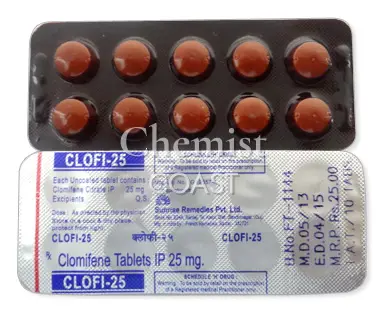
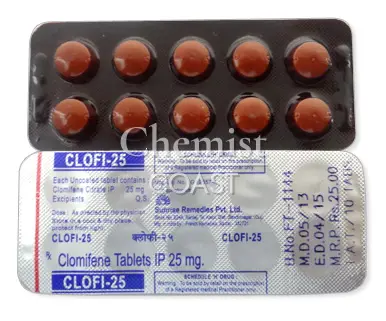
Clomiphene citrate is a medicine that helps your ovaries release an egg. It nudges your brain to release a little more of the hormones that start ovulation. Because of that, some people who do not ovulate regularly begin to release an egg in their cycle. It is usually used for infertility when other options haven’t worked yet, and it is prescribed and monitored by a clinician.
Clomiphene is a selective estrogen receptor modulator, or SERM. It acts on estrogen receptors in a way that tricks the brain into thinking estrogen is lower than it is. In response, the pituitary gland sends more FSH and LH to stimulate the ovaries to mature and release an egg. It comes as tablets you take by mouth for several days in your cycle, commonly starting on day 2 through day 5, and you may repeat the course for up to five cycles if needed.
Clomiphene is not a contraceptive. It is used only when a clinician has determined ovulation problems are contributing to infertility. Results vary; pregnancy may not happen in every cycle, and it takes time. Your clinician will guide how to use it and what tests to have during treatment.
Clomiphene is most often used for infertility caused by irregular ovulation or anovulation, including PCOS. It helps some people with delayed or missed ovulation to produce a mature egg. It may also be used in certain cases with male-factor infertility alongside other treatments, under specialist care.
In some women, clomiphene helps restore regular ovulation and can increase the chance of pregnancy in a given cycle. It is usually started after a full evaluation by your doctor, and you may have ultrasound checks or hormone tests to track response and adjust the plan. The goal is to achieve a healthy pregnancy while using the lowest effective dose and the shortest possible duration. Ongoing care is important to monitor safety and outcomes.
Do not use if you are pregnant. Clomiphene can harm a developing baby and is not suitable during pregnancy. It is also not advised if you have significant liver disease or liver dysfunction, since the medicine is processed in the liver.
Do not use if you have abnormal vaginal bleeding that has not been investigated, unless advised by a clinician. It is also not suitable if you have ovarian cysts not caused by PCOS, or if you have cancers that depend on estrogen, such as some breast cancers. A personal or family history of blood clots warrants caution because clomiphene may raise the risk of clotting.
Other precautions include a history of liver disease, uncontrolled thyroid problems, or pituitary disorders, which can affect how you respond. If you notice new vision changes, stop the medicine and contact your clinician. Clomiphene can increase the chance of multiple pregnancies and ovarian enlargement; discuss the plan with your care team. If you have severe abdominal pain, rapid swelling, or shortness of breath, seek medical help promptly as these can be signs of ovarian overstimulation.
During treatment, your clinician will check your response with exams or ultrasound. Do not use if you are breastfeeding unless advised by your clinician. If you develop severe abdominal symptoms, persistent vomiting, or yellowing of the skin or eyes, tell your doctor right away, as these may indicate a problem with the liver or a serious reaction.
Common side effects include hot flashes, breast tenderness, nausea or abdominal discomfort, headaches, dizziness, mood changes, and temporary blurred vision or floaters. Some people notice mild weight gain or breast swelling during treatment.
Uncommon side effects can include heavier than usual menstrual bleeding after a cycle, upset stomach, or sleep problems. Ovarian enlargement and early signs of ovarian cysts may occur, especially in the first cycles of use. A small number of people report changes in their vision that resolve after stopping the medicine.
Rare or serious side effects include signs of liver problems (yellowing of the skin or eyes, dark urine), severe abdominal pain, swelling or sudden weight gain, chest pain, or trouble breathing. Allergic reactions such as rash, itching, swelling of the face or throat, or severe dizziness are uncommon but require urgent care. There is also a small but important risk of blood clots with any hormonal therapy, including clomiphene; seek urgent help if you develop leg swelling, chest pain, or shortness of breath.
Tell your clinician about all medicines you take, including vitamins, herbal products, or other fertility drugs. Estrogen-containing medicines (such as some birth control pills or hormone therapies) can counteract the effect of clomiphene, so they are usually stopped or avoided during clomiphene treatment unless your clinician says otherwise.
Drugs that affect liver enzymes can change clomiphene levels. For example, some enzyme-inducing medicines (like certain anticonvulsants or rifampin) may reduce clomiphene’s effect by increasing its breakdown. On the other hand, medicines that raise liver levels of clomiphene (like some antifungals) could increase side effects. Do not start or stop any medicine without talking to your clinician.
Avoid using additional fertility drugs unless your clinician specifically guides you to, because combining them can raise the risk of ovarian overstimulation or multiple pregnancies. Herbal supplements such as St. John’s wort may affect hormone levels and treatment response. Smoking may also reduce the chance of success with clomiphene, and alcohol use should be discussed with your clinician as part of your treatment plan.
14–21 days. Free from A$284.93 .
5–9 days. A$42.74
−10% when paying with cryptocurrency.
−10% on all repeat orders.
All orders are packed in neutral, unbranded boxes with no product name on the outside.