📞  — free, 24/7
 — free, 24/7| Package | Price per Dose | Price | |
|---|---|---|---|
| 90 tab | A$40.85 | A$4,085.13 A$3,676.62 Free shipping | |
| 60 tab | A$41.96 | A$2,797.02 A$2,517.32 Free shipping | |
| 30 tab | A$44.16 | A$1,472.10 A$1,324.89 Free shipping | |
| 20 tab | A$45.27 | A$1,005.93 A$905.34 Free shipping | |
| 10 tab | A$46.37 | A$515.22 A$463.70 Free shipping | |
| 90 tab | A$47.48 | A$4,747.59 A$4,272.83 Free shipping | |
| 60 tab | A$48.58 | A$3,238.66 A$2,914.79 Free shipping | |
| 30 tab | A$50.79 | A$1,692.92 A$1,523.63 Free shipping | |
| 20 tab | A$51.89 | A$1,153.14 A$1,037.83 Free shipping | |
| 10 tab | A$53.00 | A$588.83 A$529.94 Free shipping | |
| 90 tab | A$51.89 | A$5,189.23 A$4,670.30 Free shipping | |
| 60 tab | A$53.00 | A$3,533.08 A$3,179.77 Free shipping | |
| 30 tab | A$55.20 | A$1,840.14 A$1,656.12 Free shipping | |
| 20 tab | A$56.31 | A$1,251.28 A$1,126.16 Free shipping | |
| 10 tab | A$57.41 | A$637.90 A$574.11 Free shipping |
Disclaimer: This information is intended for adults in Australia and is not a substitute for professional medical advice. Consult a healthcare professional before starting or stopping Rybelsus.
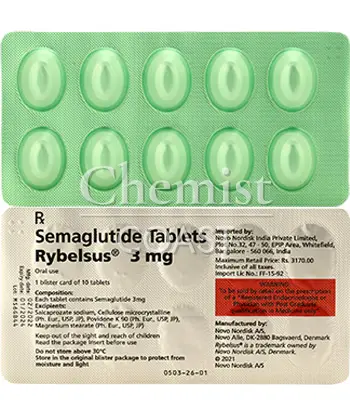
Rybelsus is an oral glucagon-like peptide-1 receptor agonist used to improve glycemic control in adults with type 2 diabetes. It belongs to the incretin-based therapy class that mimics a natural hormone to stimulate insulin release when blood glucose is elevated. (glucagon-like peptide-1 receptor agonist; incretin-based therapy)
The primary therapeutic purpose is to reduce hyperglycemia and support weight management when lifestyle modifications and other medications do not achieve target. The tablet form provides an oral option for a medication class often available as injections. (oral, non-injectable option for GLP-1 receptor agonist)
In Australia, Rybelsus may require a prescription depending on local rules and is supplied in a form designed for daily oral use. The medication is not indicated for type 1 diabetes or the treatment of diabetic ketoacidosis and should be used only under medical supervision. (prescription status varies by jurisdiction)
Rybelsus is typically considered for adults with type 2 diabetes as part of an overall plan including diet, physical activity, and other glucose-lowering therapies. Caution is advised in certain medical conditions; the official patient leaflet should be consulted for detailed safety information. (monotherapy or combination therapy considerations)
Clinical use requires individual assessment by a clinician, and therapy may be adjusted based on tolerability, response, and comorbid conditions. Any plan to start, switch, or stop therapy should be discussed with a healthcare professional. (individualized treatment planning)
Rybelsus is indicated for adults with type 2 diabetes to improve glycemic control when diet and exercise alone are insufficient. It is one option among several oral and injectable glucose-lowering therapies. (indication overview)
Doctors weigh several factors when choosing between Rybelsus and alternatives, including tolerability, risk of hypoglycemia, weight impact, and patient preference for oral versus injectable therapy. The decision may also reflect concurrent cardiovascular risk management and kidney or liver function. (treatment decision factors)
Rybelsus is not a universal replacement for all oral antidiabetic drugs; it is selected when a GLP-1 receptor–driven mechanism is appropriate and an oral formulation is preferred. In some cases, a clinician may combine it with other medicines in a stepped approach. (combination therapy considerations)
Contraindications and cautions include a history of personal or family medullary thyroid carcinoma or multiple endocrine neoplasia type 2 (MEN2), significant gastrointestinal disease, and pregnancy. The safety profile should be reviewed with a clinician before initiating therapy. (contraindications and cautions)
In practice, treatment plans are tailored to individual needs, with ongoing assessment of blood glucose, weight, and tolerability. If a patient has other medical conditions or is taking multiple medicines, a clinician may adjust therapy to reduce potential interactions or adverse effects. (individualized management)
Rybelsus acts as a GLP-1 receptor agonist, enhancing glucose-dependent insulin secretion when blood glucose rises and suppressing inappropriately elevated glucagon. This helps lower post-meal glucose levels. (mechanism: incretin-based insulin modulation)
In addition, Rybelsus slows gastric emptying and reduces appetite, contributing to lower postprandial glucose and potential weight benefits. These effects are characteristic of GLP-1 receptor agonists and are leveraged in therapy plans for type 2 diabetes. (gastrointestinal and appetite effects)
The oral tablet is formulated to allow absorption in the stomach or upper small intestine, which distinguishes it from injectable GLP-1 receptor agonists that are delivered subcutaneously. Adherence to administration instructions affects absorption and therapeutic response. (oral formulation considerations)
Compared with some injectable GLP-1 receptor agonists, the daily oral dosing of Rybelsus may influence adherence and accepted treatment routines for patients who prefer not to use injections. Individual responses vary, and a clinician may monitor effects over weeks to determine whether dose adjustments are needed. (dosing format and response)
Clinical use emphasizes safety alongside efficacy; discussions about potential side effects, interactions, and comorbidity management help support appropriate outcomes. (safety-focused mechanism and practice)
The table below provides a general overview of how Rybelsus compares with select well-known antidiabetic therapies. Individual responses vary; healthcare professionals determine the best option for each patient. (comparative context)
| Name | Primary use | Typical onset | Key advantage |
|---|---|---|---|
| Rybelsus (oral semaglutide) | Glycemic control in adults with type 2 diabetes; oral GLP-1 receptor agonist | Glucose-lowering effects typically observed within days to weeks; full effect over weeks | Oral, daily dosing option within the GLP-1 receptor agonist class |
| Ozempic (semaglutide, injectable) | Glycemic control in adults with type 2 diabetes; may also be used for cardiovascular risk considerations | Effects generally emerge over several weeks | Weekly dosing with a long-acting effect; convenient for some patients |
| Victoza (liraglutide, injectable) | Glycemic control in adults with type 2 diabetes; may support weight and cardiovascular risk considerations | Effects typically seen over weeks | Daily injections with established efficacy and clinical usage history |
| Trulicity (dulaglutide, injectable) | Glycemic control in adults with type 2 diabetes | Glycemic effects appear over weeks | Weekly dosing; suitable for those who prefer less frequent injections |
The table focuses on general attributes; real-world outcomes depend on individual factors including adherence, concomitant therapies, and overall health. Always consult a clinician for personalized guidance. (interpretive note)
The comparative perspective highlights dosing convenience and route of administration as possible influences on treatment choice, in addition to effectiveness and tolerability. (practical considerations)
Rybelsus is taken orally once daily as part of an overall diabetes management plan. Administration requires attention to timing and the avoidance of certain co-administered medicines that could interfere with absorption. (administration basics)
Take the tablet on an empty stomach with a small amount of water, at least 30 minutes before the first meal or other oral medications of the day. Do not chew or crush the tablet. (timing and method)
If a dose is missed, resume the next planned daily dose and do not double-dose to make up for a missed dose. Any changes should be discussed with a clinician. (missed dose guidance)
Rybelsus should not be used to replace insulin in patients who require insulin therapy unless advised by a clinician. Inform the healthcare professional about all medicines currently being taken to avoid potential interactions. (drug interaction awareness)
Storage should be in the original packaging and away from moisture; keep out of reach of children. Always check the official leaflet for storage specifics. (storage considerations)
Common adverse effects include nausea, vomiting, diarrhea, decreased appetite, and abdominal discomfort. These symptoms often lessen with continued use. (common adverse effects)
Serious adverse effects, though uncommon, can occur and require immediate medical attention. Seek urgent help if persistent severe abdominal pain, vomiting, or signs of pancreatitis appear. (serious adverse event guidance)
Contraindications include a personal or family history of medullary thyroid carcinoma or multiple endocrine neoplasia type 2 (MEN2), significant gastrointestinal disease, and pregnancy. A clinician should assess benefits and risks before starting therapy. (contraindications)
Potential risk factors for adverse events should be discussed with a healthcare professional, and any new symptoms should be reported promptly. (patient monitoring)
Because Rybelsus is absorbed in the gastrointestinal tract, certain other oral medicines may have altered absorption if taken at the same time. Separation of administration times may be advised by a clinician. (absorption considerations)
Rybelsus may increase the risk of hypoglycemia when used with insulin or sulfonylureas. Dose adjustments of other diabetes medicines may be required under medical guidance. (hypoglycemia risk)
Information about combining Rybelsus with other medications, including non-diabetic therapies, should be reviewed with a pharmacist or doctor to minimize interaction risks. (medication review)
Store Rybelsus at room temperature away from moisture and heat, in the original packaging until use. Keep out of reach of children and dispose of unused tablets according to local regulations. (storage basics)
Check the packaging and patient information leaflet for any product-specific instructions; formats can vary by country and batch. (product-specific guidance)
Keep a current record of all medicines being taken to facilitate a pharmacist or clinician review when needed. (medication record)
Switching may be appropriate in some cases, but a clinician should assess whether a transition is suitable and safe based on current therapy, tolerability, and medical history. The dosing plan should be guided by a healthcare professional. (switching considerations)
Benefits depend on individual goals, including preference for oral versus injectable therapy, tolerability, and response. Effectiveness varies among patients, and a clinician can help determine the best option in light of personal circumstances. (comparative decision factors)
Rybelsus offers an oral route, while Ozempic is a weekly injectable. Both can improve glycemic control, but the method of administration and patient preference influence choices. (administration and preference considerations)
Generic versions are not universally available; availability may depend on local regulatory and patent status. Consult a pharmacist for current options in Australia. (generic availability)
Because responses vary, improvements are typically observed over several weeks, with ongoing assessment by a clinician to determine effectiveness and need for dose adjustments. (expected timeframe)
Rybelsus can be used in combination with other diabetes medicines as prescribed, but potential interactions and cumulative effects should be reviewed by a clinician. (combination therapy guidance)
Pregnancy and breastfeeding require careful consideration; the safety profile in pregnancy has not been established and should be discussed with a clinician. (pregnancy considerations)
Missed doses should be addressed with a clinician guidance; generally, the next scheduled dose should be taken as planned, without double-dosing. (missed dose guidance)
Additional information is available through official patient information leaflets provided with the product and from healthcare professionals. Pharmacists can answer questions about administration, interactions, and monitoring. (learning resources)
For Australia-specific guidance, consult the Therapeutic Goods Administration (TGA) resources and local pharmacy or clinician services. (local regulatory context)
Continued medical review is recommended to ensure safe and effective use, especially when starting, changing, or stopping therapy. (ongoing care)
14–21 days. Free from A$284.93 .
5–9 days. A$42.74
−10% when paying with cryptocurrency.
−10% on all repeat orders.
All orders are packed in neutral, unbranded boxes with no product name on the outside.