📞  — free, 24/7
 — free, 24/7| Package | Price per Dose | Price | |
|---|---|---|---|
| 360 pills | A$0.73 | A$374.90 A$262.43 | |
| 240 pills | A$0.79 | A$270.93 A$189.65 | |
| 180 pills | A$0.82 | A$211.06 A$147.74 | |
| 120 pills | A$0.88 | A$151.20 A$105.84 | |
| 90 pills | A$0.95 | A$122.84 A$85.99 | |
| 60 pills | A$0.99 | A$85.04 A$59.53 | |
| 30 pills | A$1.04 | A$44.08 A$30.85 | |
| 360 pills | A$1.08 | A$554.49 A$388.14 Free shipping | |
| 240 pills | A$1.19 | A$409.55 A$286.69 Free shipping | |
| 180 pills | A$1.30 | A$333.94 A$233.76 | |
| 120 pills | A$1.48 | A$252.02 A$176.42 | |
| 90 pills | A$1.65 | A$214.21 A$149.95 | |
| 60 pills | A$1.74 | A$148.05 A$103.63 | |
| 30 pills | A$1.87 | A$81.89 A$57.32 |
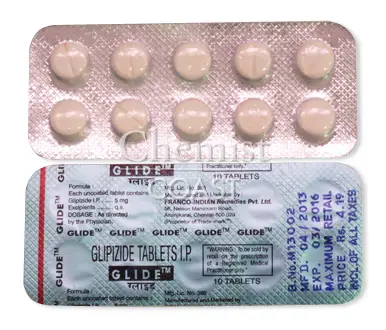
What is Glipizide, and how does it help people with type 2 diabetes? Glipizide is an oral hypoglycemic agent in the sulfonylurea class that lowers plasma glucose by stimulating endogenous insulin release from functioning pancreatic beta cells. It is approved for glycemic control in adults with type 2 diabetes and is used as monotherapy or as part of combination regimens (for example with metformin or insulin) when diet and exercise alone do not achieve targets. Available as immediate-release tablets and an extended-release formulation, glipizide offers flexibility to align dosing with meals and daily routines.
Effectiveness depends on residual beta-cell function and adherence to a comprehensive treatment plan. Glipizide is not active in the absence of functional beta cells, and it is not indicated for type 1 diabetes or for diabetic ketoacidosis. The onset of action for immediate-release products typically occurs within 30 minutes to 1 hour, with peak effect in the ensuing hours; extended-release forms provide prolonged plasma exposure to support once-daily dosing. Commonly encountered safety considerations include the potential for hypoglycemia and weight gain, particularly in patients with inconsistent meals or impaired hepatic or renal function.
Primary indication: Glipizide is indicated to improve glycemic control in adults with type 2 diabetes as an adjunct to diet and exercise. It may be used when lifestyle modification alone is insufficient to achieve target HbA1c and fasting glucose. In many regimens, glipizide is combined with metformin or thiazolidinediones to achieve complementary effects on fasting and postprandial glucose; it can also be used with basal insulin in selected patients who require less exogenous insulin than previously used.
As a secondary option, glipizide serves as an add-on or alternative to other oral agents in adults who require intensified glycemic control but prefer oral therapy. It has a long history of use in combination regimens and may reduce the insulin dose required when insulin therapy is begun or intensified. It is generally avoided in patients with significant renal impairment if hypoglycemia risk is high, and dose adjustments are often necessary when hepatic function is compromised.
Contraindications and cautions: It is not indicated for type 1 diabetes or diabetic ketoacidosis, and it should be avoided in patients with a known hypersensitivity to sulfonylureas. Use during pregnancy and lactation is approached with caution; alternatives are often preferred, and therapy should be informed by risk-benefit assessment. The drug is contraindicated in severe hepatic impairment; monitor hepatic function in long-term therapy and consider dose modification or discontinuation if liver enzymes rise or hypoglycemia occurs.
Glipizide acts primarily by stimulating pancreatic beta cells to release insulin. It binds to sulfonylurea receptors on the surface of these cells, closing ATP-sensitive potassium channels. The resulting cell depolarization opens voltage-gated calcium channels, increasing intracellular calcium and triggering exocytosis of insulin-containing granules. This mechanism boosts endogenous insulin secretion in a glucose-dependent manner, provided residual beta-cell function is present.
Some secondary actions may influence hepatic glucose production and peripheral glucose utilization, but these effects are modest compared with the beta-cell effect. The magnitude of the response correlates with ambient glucose levels: higher efficacy occurs when glucose is available, reducing the likelihood of profound hypoglycemia when meals are regular. The drug does not replace insulin and is ineffective in type 1 diabetes or advanced beta-cell failure.
Hypoglycemia is the principal safety concern with glipizide. Risk is increased in elderly patients, those with reduced caloric intake, hepatic or renal impairment, or when meals are skipped or alcohol is consumed. Patients should be instructed on recognizing warning signs (sweating, tremor, palpitations, confusion) and on timely carbohydrate intake to avert severe events. Concomitant use with other insulin secretagogues or insulin can markedly raise the risk.
Weight gain, nausea, headache, dizziness and dermatologic reactions occur with variable frequency. Severe hypersensitivity or skin reactions are rare but possible. Dose adjustments should be made cautiously, particularly during intercurrent illness or when renal/hepatic function changes. Because the drug is hepatically metabolized, significant hepatic impairment requires careful consideration and possible alternatives or insulin therapy to minimize risk.
Glipizide is administered orally in immediate-release and extended-release formulations. The immediate-release form is usually taken with meals to modulate absorption and reduce postprandial hypoglycemia, while the extended-release form is taken once daily with the first meal. The drug is extensively metabolized by the liver, primarily via CYP2C9 pathways, and most metabolites are eliminated via bile; renal excretion of unchanged drug is limited. Hepatic impairment may prolong exposure and increase hypoglycemia risk, necessitating dose modification and closer monitoring.
Typical starting doses are 2.5–5 mg once daily for immediate-release tablets, with gradual titration to a maintenance range of 5–15 mg daily; maximum recommended dose is 20 mg per day. Extended-release formulations commonly start at 5 mg once daily and may be titrated to 10–20 mg depending on response and tolerability. Patients should be advised to monitor glucose levels regularly, maintain regular meals, and inform the clinician of signs of hypoglycemia or adverse effects. Drug interactions with agents that enhance insulin secretion or promote hypoglycemia require appropriate dose adjustments and clinical oversight.
14–21 days. Free from A$284.58 .
5–9 days. A$42.69
−10% when paying with cryptocurrency.
−10% on all repeat orders.
All orders are packed in neutral, unbranded boxes with no product name on the outside.