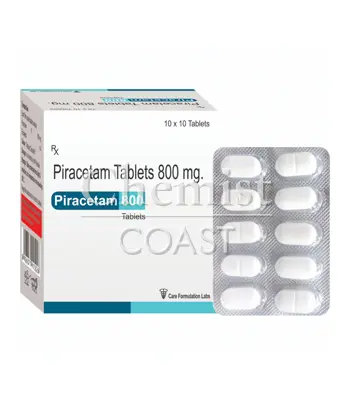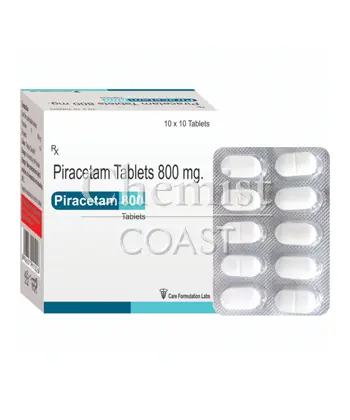
📞  — free, 24/7
 — free, 24/7| Package | Price per Dose | Price | |
|---|---|---|---|
| 360 pills | A$1.22 | A$487.15 A$438.43 Free shipping | |
| 270 pills | A$1.42 | A$425.63 A$383.07 Free shipping | |
| 180 pills | A$1.62 | A$322.29 A$290.07 Free shipping | |
| 120 pills | A$1.84 | A$246.02 A$221.42 | |
| 90 pills | A$2.04 | A$204.19 A$183.77 | |
| 60 pills | A$2.26 | A$150.06 A$135.06 | |
| 30 pills | A$2.59 | A$86.09 A$77.48 | |
| 360 pills | A$1.62 | A$647.07 A$582.37 Free shipping | |
| 270 pills | A$1.84 | A$551.12 A$496.01 Free shipping | |
| 180 pills | A$2.04 | A$408.41 A$367.57 Free shipping | |
| 120 pills | A$2.24 | A$297.69 A$267.92 | |
| 90 pills | A$2.44 | A$243.56 A$219.20 | |
| 60 pills | A$2.66 | A$177.13 A$159.42 | |
| 30 pills | A$3.03 | A$100.85 A$90.77 |
Could piracetam help with memory problems after a stroke or age-related cognitive change? Piracetam is a prescription medicine used as an adjunct to standard therapies for certain cognitive disorders and neurologic conditions. It belongs to the racetam family and has a profile studied for safety and tolerability in adults and, in some regions, for specific neurologic syndromes.
Piracetam is a small synthetic compound that acts as a nootropic agent. It is not a sedative and does not depress motor function. In clinical use, it is commonly prescribed as part of a broader treatment plan for selected cognitive disorders and certain movement disorders linked to brain disease. Availability varies by country and formulation may include oral tablets or sachets for oral solution.
Pharmacologically, piracetam is thought to influence brain function through modulation of neuronal membranes and synaptic signaling. It is typically well tolerated at therapeutic doses, with a relatively short duration of detectable circulation. The drug is mainly eliminated by the kidneys, so renal function affects its clearance and dosing decisions.
Typical dosing commonly falls in the range of 1.2 to 4.8 g per day, divided into two or three administrations. In renal impairment, dose adjustment is advised to minimize accumulation. Contraindications include known hypersensitivity to piracetam or related compounds, and careful use is advised in patients with significant renal dysfunction.
Primary indications include cognitive impairment associated with aging and with cerebrovascular disease. In practice, piracetam may be added to standard therapies to support attention, memory and executive function in appropriately selected patients. Benefits, when observed, are typically modest and best seen as part of a comprehensive rehabilitation plan. It is not a cure for dementia and responses vary between individuals.
Another established use is as adjunctive therapy for certain myoclonus syndromes, particularly cortical myoclonus. In this setting, some patients report reduced frequency or severity of involuntary movements and improved daily function. The quality and durability of benefit can vary and must be weighed against potential side effects.
Secondary indications have included post‑traumatic cognitive deficits and other neurodegenerative conditions studied in clinical trials. Across studies, results have been heterogeneous, with many trials showing limited or inconsistent benefit. Piracetam is generally not considered a stand‑alone cure for cognitive decline but may offer supplementary support in selected cases.
The mechanism of action remains multifactorial and not fully defined. Piracetam is believed to enhance membrane fluidity, which can positively influence receptor function and intracellular signaling in neurons. This may help optimize communication among brain cells, particularly in vulnerable networks involved in learning and memory.
Additionally, piracetam appears to modulate neurotransmitter systems, including acetylcholine and glutamate pathways, potentially supporting synaptic plasticity and long‑term learning processes. Some proposed effects include improved microcirculation and energy efficiency in brain tissue under stress, though these findings vary by study and are not uniformly observed.
Pharmacokinetics are characterized by rapid oral absorption, with peak plasma concentrations typically reached within 1–2 hours. The elimination half‑life is in the order of a few hours, and renal excretion is the primary route. Consequently, patients with reduced renal function require dosing adjustments to maintain safe exposure levels.
Safety data indicate that piracetam is generally well tolerated. Most frequent adverse events are mild to moderate and include headache, gastrointestinal upset, nausea, insomnia, and occasional anxiety or agitation. Dizziness or flushing may occur, especially at higher doses.
Serious adverse events are uncommon. Clinicians should monitor patients with renal impairment and adjust the dose accordingly. Hypersensitivity reactions can occur in susceptible individuals; caution is advised in those with a history of significant drug reactions. As with any central nervous system–active medication, it is important to review all concomitant medicines to assess potential interactions and overall risk.
14–21 days. Free from A$285.73 .
5–9 days. A$42.86
−10% when paying with cryptocurrency.
−10% on all repeat orders.
All orders are packed in neutral, unbranded boxes with no product name on the outside.